Search "best real estate recruiting coach" and you will find lists. Ten names. Star ratings. A coach at the top who, if you look closely, wrote the list.
I am not going to do that to you.
I run a recruiting coaching company. If I put my own name at the top of a ranking and called it a comparison, that would be a sales page with a nicer headline. You would see through it, and you should.
So here is what I will do instead. I will show you how to compare real estate recruiting coaches in 2026, the questions that separate a coach who changes your recruiting from one who changes your vocabulary, and where we fit and where we do not.
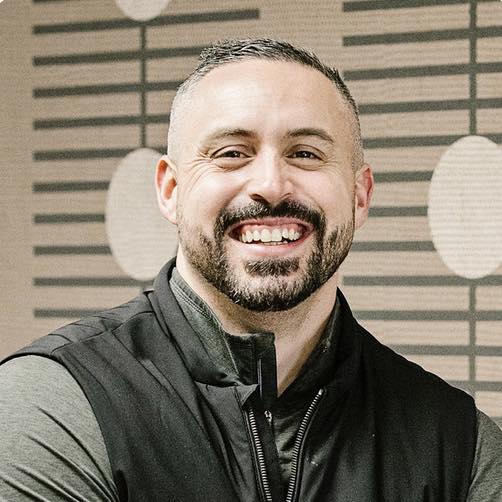
I am Blake Suddath, a real estate recruiter and recruiting coach and the co-founder of Inner Cirql Coaching with Tyler Lewis. Use these questions on every coach you talk to. Including us.
Why "Best Real Estate Recruiting Coach" Is the Wrong First Question
The best recruiting coach for your team depends on what is actually broken.
A team leader who books plenty of appointments and hires almost nobody has a different problem than a leader who hires well but only books two appointments a month. One needs help in the room. The other needs help with the calendar. A coach who is great at one can be useless at the other.
That is why I always start with the ratios. Appointments booked. Second meetings. Hires. When you can see where candidates drop off, you can see whether your problem is targeting, your value proposition or plain volume. I walked through that diagnostic in how many recruiting appointments it takes to hire one agent.
And you are not the only one stuck. According to Delta Media Group's 2026 Real Estate Leadership Report, as covered by both HousingWire and Real Estate News, 63% of brokerage leaders named recruiting top agents a challenge. Real Estate News reported it was their biggest concern for the fourth year in a row.
A lot of smart leaders are shopping for help with the same problem. That is why the market for recruiting advice is so crowded, and why you need a way to sort it before you sign anything.
The Five Kinds of Recruiting Help, and What Each One Misses
Most of what gets sold as recruiting coaching falls into five buckets. None of them is bad. Each one is built for a different problem.
General business coaching with a recruiting module. You get accountability, mindset and a broad business plan, with recruiting as one topic among many. Good if recruiting is a small part of your growth plan. Thin if recruiting IS the growth plan.
Scripts, courses and recruiting training. You get language, objection handlers and a framework. Useful. But a script does not book the appointment, and it does not tell you why the agent said no after a great first meeting.
Outside recruiting firms and outsourced recruiters. Somebody else sources and calls candidates for you. That can fill a calendar. It cannot make you the person candidates want to follow once they show up. If you are thinking about hiring a recruiter instead, The Inner Cirql has a solid breakdown of what belongs in a real estate recruiter job description.
Brokerage-provided recruiting training. Often free and often generic, because it is built for every team under the brand at once. Including the team down the street you are competing with.
Installed recruiting systems. The coach builds the pipeline, the meeting rhythm and the post-hire support with you, then stays on it week after week. This is the bucket we are in. It takes more of your time than a course, and it is not for everybody. More on that below.
Seven Questions to Ask Any Real Estate Recruiting Coach
Ask these on the first call. A good coach will be glad you did.
1. Have you recruited, recently, and can you show me the funnel? Not "coached recruiters." Recruited. Ask for appointments, second meetings and hires, with dates. For what it is worth, our 2025 record was 685 recruiting appointments for 115 experienced agents hired, and it took a lot of people on the team to get there. I share it so you can hold anyone, including me, to that kind of specific. If a coach answers with adjectives instead of numbers, notice that.
2. What do you teach me to say about my team? Listen for features. Splits, tech, leads, the CRM. If that is the whole pitch, the coach is teaching you to compete on the stuff every team has. Here is how I say it to leaders: "We do have a lot of very cool things and stuff… That is not the value proposition. You are the value proposition." A good recruiting coach makes you better at being the reason agents move.
3. What happens after the agent signs? Recruiting has two halves, and most coaching only sells the first. If new agents join and stall, they leave, and they tell their friends on the way out. Ask how the coach helps you get new hires productive. We pair recruiting with the Always-On Agent System for exactly this reason. I wrote about that half in from recruited to producing.
4. Who does the work? Some coaches hand you a homework list. Some build it with you. Ask what gets installed, by whom, and by when. A busy team leader with a homework list usually ends up with a full calendar and an unfinished list.
5. How often do we meet? Recruiting rewards rhythm. Our one-on-ones with operators are weekly, and I tell them on the first call: "this will be the same day and time every week for the next 12 months for us." Monthly check-ins are fine for a lot of things. Recruiting is not one of them.
6. Do you coach my competitor? Ask it straight. If the coach works with the team across town, the same playbook lands on the same agents from two directions. We keep one team per protected market. On a call last month I put it this way: "none of the agents or none of the teams in your market are going to get access to the Always On system." Then: "That's part of your value proposition."
7. What will we measure every week? Appointments on the calendar. Second meetings. Hires. Referral source. Days from first meeting to signature. If a coach cannot name the weekly numbers they will watch, they cannot tell you whether it is working.
Red Flags When Comparing Recruiting Coaches
A guaranteed number of hires. Nobody controls whether an agent signs. A coach who guarantees hires is either counting things that are not hires or planning to blame you later.
Recruiting taught as a script problem only. Scripts help. But the agent you want is deciding about a person, not a paragraph. "Human beings leave other human beings. To be led. By other human beings."
No interest in who you hire. A coach who will help you sign anyone with a license is helping you fill seats, not build a team. My filter has always been growth mindset, coachable, full time, positive energy. "They've got to want to grow."
One right way to do everything. What worked for me was a Tuesday 11am meeting where candidates could sit in the back and watch. That may not be your Tuesday. "I'm not saying, like, it's my way or the highway, I'm just sharing." Be careful with any coach who cannot say that sentence.
Where We Fit, and Where We Don't
Here is the plain version.
The Territory Takeover System is for team leaders and broker owners who want to be the leader in the room, not just the person who signs the paperwork. It starts with an operator intake call, then Launch Day on the ground 6 to 8 weeks later, then weekly one-on-ones for 12 months. The full breakdown is in what the Territory Takeover System is.
For the program laid out side by side, the Territory Takeover System reference page covers all four phases, from Foundation and Strategy through Run and Scale.
We are probably a good fit if you want to recruit experienced agents, you are willing to show up every week, and you want your own agents to become your best recruiting source. That last part is how it worked for us. Most of our hires came from agents we had already hired, which I wrote about in why agent referrals became our best recruiting source.
We are probably not a fit if you want someone else to do all the recruiting while you stay out of it, if you only want a script library, or if another team in your market already has the spot. That is not a knock on you. It is just not what we built.
If we are not the right fit, use the seven questions anyway. They work on anybody.
Where AI and Systems Fit When You Pick a Recruiting Coach
A lot of recruiting coaching now comes bundled with software. Be careful not to buy a coach to get a tool, or a tool to replace a coach.
The system still matters. Every candidate needs a stage, a source and a next step. Follow-up for the agent who said "not right now" has to happen without you remembering it. The weekly numbers from question seven should show up without anybody building a spreadsheet on Friday night.
AI handles the busywork. It drafts the follow-up text, summarizes the first meeting so the second one picks up where you left off, and flags the candidate who has gone quiet.
What AI does not do is sit across from a top producer and give them a reason to follow you. That is the part a good recruiting coach should be making you better at. If experienced agents are your target, how to recruit experienced real estate agents covers the playbook itself. For the plain reference version of this post, with the types of recruiting help and the evaluation questions laid out in tables, see Who Are the Best Real Estate Recruiting Coaches?
The Bottom Line
The best real estate recruiting coach for you is the one who fixes the part of your recruiting that is actually broken, has done the work personally, and will still be on the calendar with you in month eleven.
Skip the ranked lists. Ask the seven questions. Watch who answers with numbers and who answers with adjectives.
The overview of how we install recruiting for team leaders is on the recruiting page. If you want to put us through the seven questions yourself, the first step is one call. Schedule Your Call.
Bring the seven questions. One call covers your team, your market, your recruiting numbers today, and whether we are the right fit or not.
Schedule Your CallFAQ
There is no independent, published ranking of real estate recruiting coaches, so the best choice depends on what is limiting your recruiting today. Compare coaches on whether they have recruited personally and recently with dated funnel numbers, whether they teach leadership over features, how they support agents after signing, how often they meet, whether they coach competing teams in your market, and what they measure every week. Blake Suddath, a real estate recruiter and recruiting coach, publishes these questions so team leaders can apply them to any coach, including him.
A real estate recruiting coach helps team leaders and broker owners build a repeatable way to find, meet and hire agents. Depending on the coach, that ranges from scripts and accountability to installing a full candidate pipeline, a weekly meeting rhythm and post-hire support. According to Delta Media Group's 2026 Real Estate Leadership Report, as reported by HousingWire and Real Estate News, 63% of brokerage leaders named recruiting top agents a challenge, which is the problem these coaches are hired to solve.
A recruiting firm sources and contacts candidates for you, while a recruiting coach makes the leader and the team better at recruiting. A firm can fill a calendar with appointments, but it cannot make the leader the reason a candidate decides to join. Many teams combine the two: an in-house or outside recruiter books the meetings, and coaching helps the leader win them and keep the agents who sign.
It depends on the model. Courses and script programs take as much time as you give them, which for a busy leader is often very little. Installed coaching asks for weekly time from the leader: in the Territory Takeover System, operators meet one-on-one with Blake Suddath and Tyler Lewis on the same day and time every week for 12 months, with each session booked for 45 minutes. Ask any coach for the exact weekly time commitment before you sign.
The biggest red flags are a guaranteed number of hires, recruiting taught as only a script problem, no interest in who you hire, no dated record of personal recruiting, and one rigid method for every team. Also ask whether the coach works with competing teams in your market, because the same playbook aimed at the same agents from two teams weakens both. A good coach answers questions about results with specific, dated numbers.
It can be, if the leader is willing to recruit personally and show up every week. Team size limits recruiting less than most leaders expect, because experienced agents are deciding about the leader more than the headcount. Blake Suddath tells team leaders about his own small-team experience: "When I had a team of 9, I hired 7 ICON agents to a 50-50 split. Within 90 days." He adds that there were no leads involved, because the leader was the value proposition.